Both materials are injected through packers into concrete cracks, but they solve fundamentally different problems. This guide explains the engineering distinction so contractors can specify with confidence.
The fundamental difference
Epoxy is a thermosetting structural adhesive. Once cured it has a tensile strength higher than the concrete around it — meaning a properly injected crack becomes monolithic again, restoring the load path. Polyurethane is a water-sealing material — it stops leaks but doesn't restore structural strength.
A useful rule of thumb: if you can put a fingertip in the crack and feel water, it's a PU job. If the crack is dry and you need the load path back, it's an epoxy job.
Side-by-side comparison
| Property | Epoxy Injection | Polyurethane Injection |
|---|---|---|
| Primary purpose | Structural repair (rebond cracks) | Water sealing (stop leaks) |
| Cured strength | > concrete tensile strength | Foam or gel — not load-bearing |
| Substrate moisture | Requires dry substrate | Requires water (water-reactive) |
| Crack width | Down to ~0.05 mm hairline | Wider cracks and joints (>0.2 mm) |
| Reaction | Two-component thermoset cure | Water-reactive expansion |
| Movement tolerance | Rigid — for dormant cracks only | Elastic (hydrophilic) or rigid (hydrophobic) |
| Cure time | 12–24 h | Seconds (initial) to 24h (full) |
When to choose epoxy
- The crack is in a load-bearing structural member (beam, column, slab) and you need to restore tensile capacity
- The crack is dormant — not actively moving from thermal cycling, traffic, or settlement
- The substrate is dry or only slightly damp — no actively flowing water
- Crack widths are fine (0.05–2 mm) where epoxy's low viscosity penetrates fully
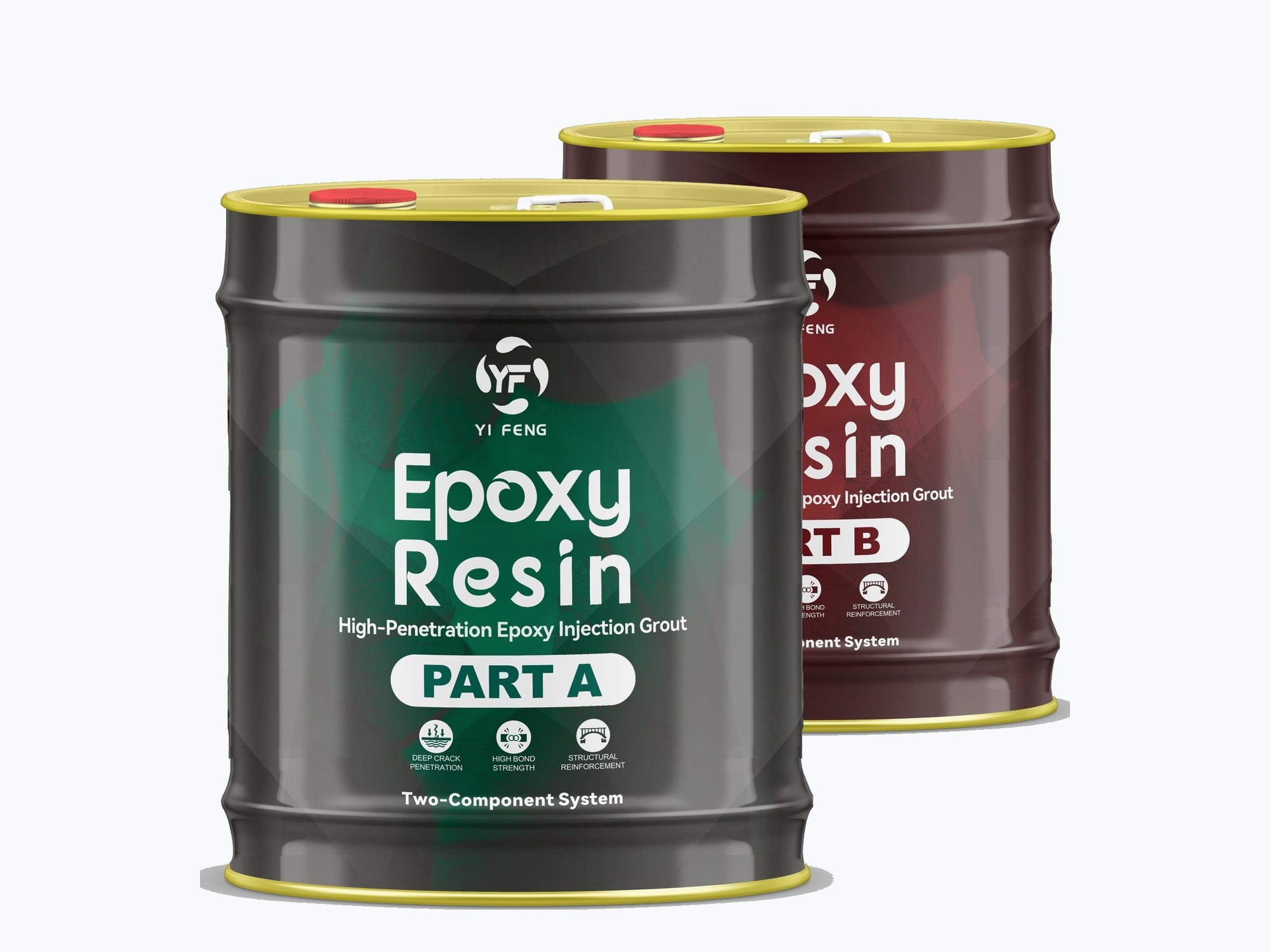
See High-Penetration Epoxy Injection Grout for typical specs and viscosity grades.
When to choose polyurethane
- The crack is leaking — actively or intermittently
- Structural strength is not the primary concern (or it will be addressed separately later)
- The crack is wider than ~0.2 mm or is a movement joint
- Water is present and cannot be reliably stopped before injection
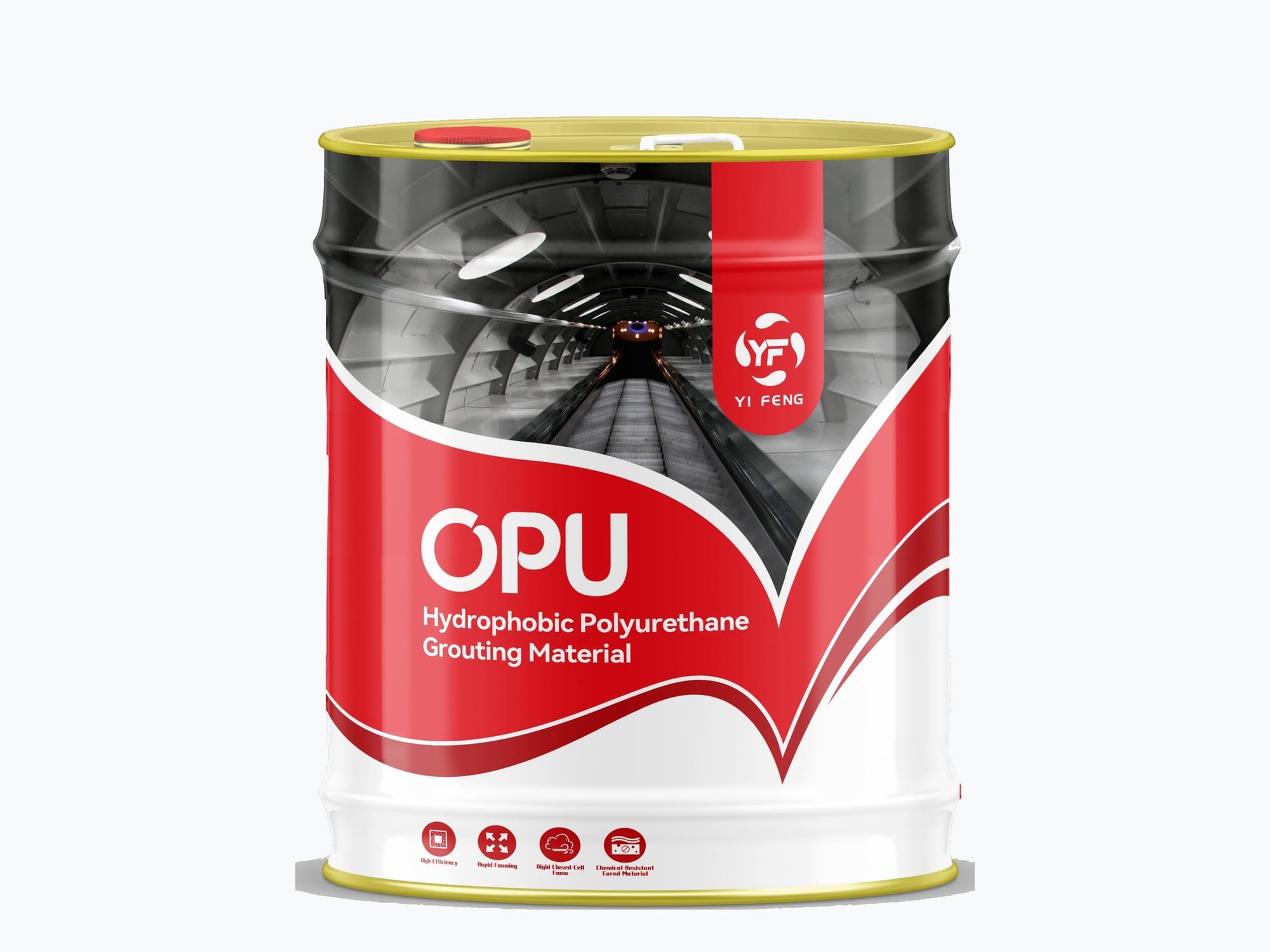
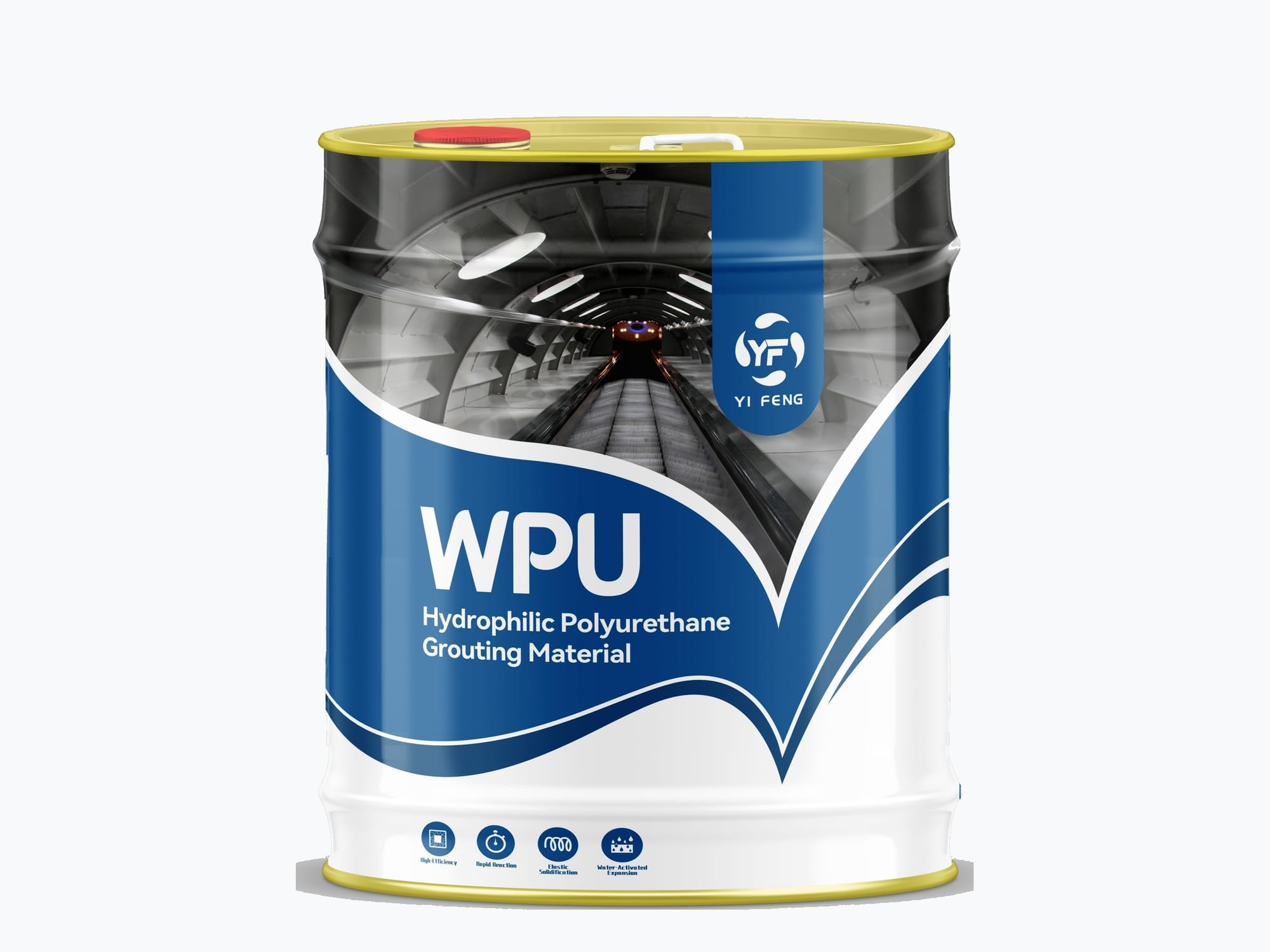
See selection guide Hydrophobic vs Hydrophilic Polyurethane to pick the right PU sub-type for the site condition.
When you need both
Cracks in load-bearing members that are also leaking require a two-step approach: stop the water with polyurethane first, then come back after the structure has dried and inject epoxy for structural repair. Trying to inject epoxy directly into a wet crack causes adhesion failure — the resin cannot bond to a wet substrate.
Equipment compatibility
Both materials use packer-and-pump injection equipment, but viscosity and pressure profiles differ. Epoxy injection typically runs at lower flow / higher pressure to drive low-viscosity resin into hairline cracks. PU runs at higher flow / lower pressure and relies on rapid expansion. A general-purpose high-pressure injection pump handles both with appropriate flow and pressure adjustment.